Why Do I Shut Down When Life Gets Overwhelming?
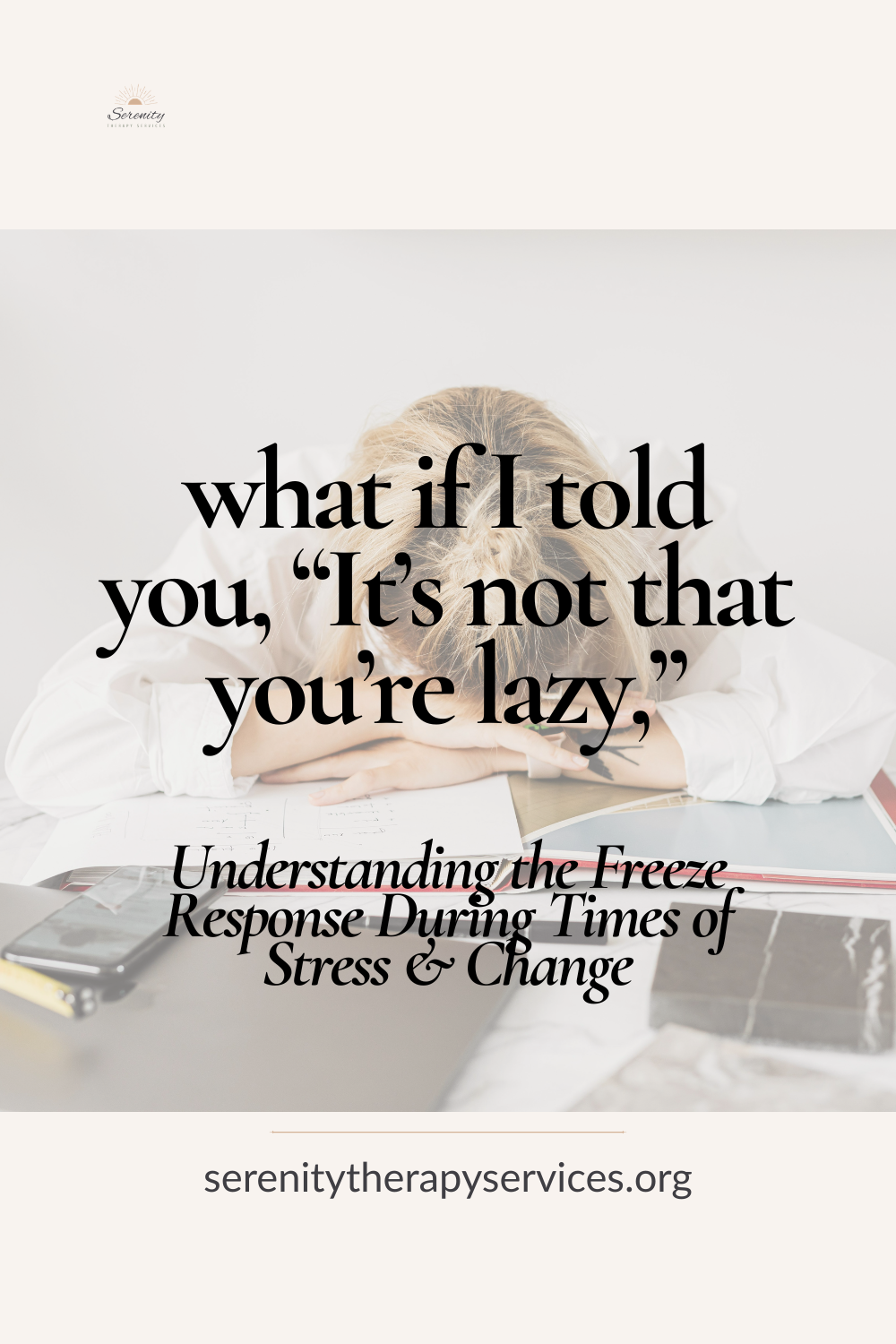
Understanding the Freeze Response During Seasons of Change
As summer approaches, you may be finding yourself dealing with and navigating through some minor and/or major transitions. School is ending. Routines and structure is changing. (kids wanting to stay up later, sun is out later, but you are still needing your rest and down time). Children home more. Schedules — the thing that used to feel predictable is suddenly feeling uncertain and pretty wonky.
While some people thrive during times of change, others find themselves feeling stuck.
Maybe you've noticed that you're struggling to return emails, tackle projects, make decisions, or accomplish tasks that normally wouldn't feel difficult. You know what needs to be done, yet you can't seem to get yourself moving. (I’ve been there, too. We all have.)
If this sounds familiar, you may not be lazy, unmotivated, or failing.
You may be experiencing a freeze response.
What Is the Freeze Response?
Most people are familiar with the fight-or-flight response. When our nervous system senses stress or danger, it prepares us to either confront the threat or escape it.
But there is another survival response that often gets overlooked: freeze.
The freeze response occurs when the nervous system becomes overwhelmed and perceives that neither fighting nor fleeing feels possible or effective.
Instead, the body conserves energy and essentially "hits pause."
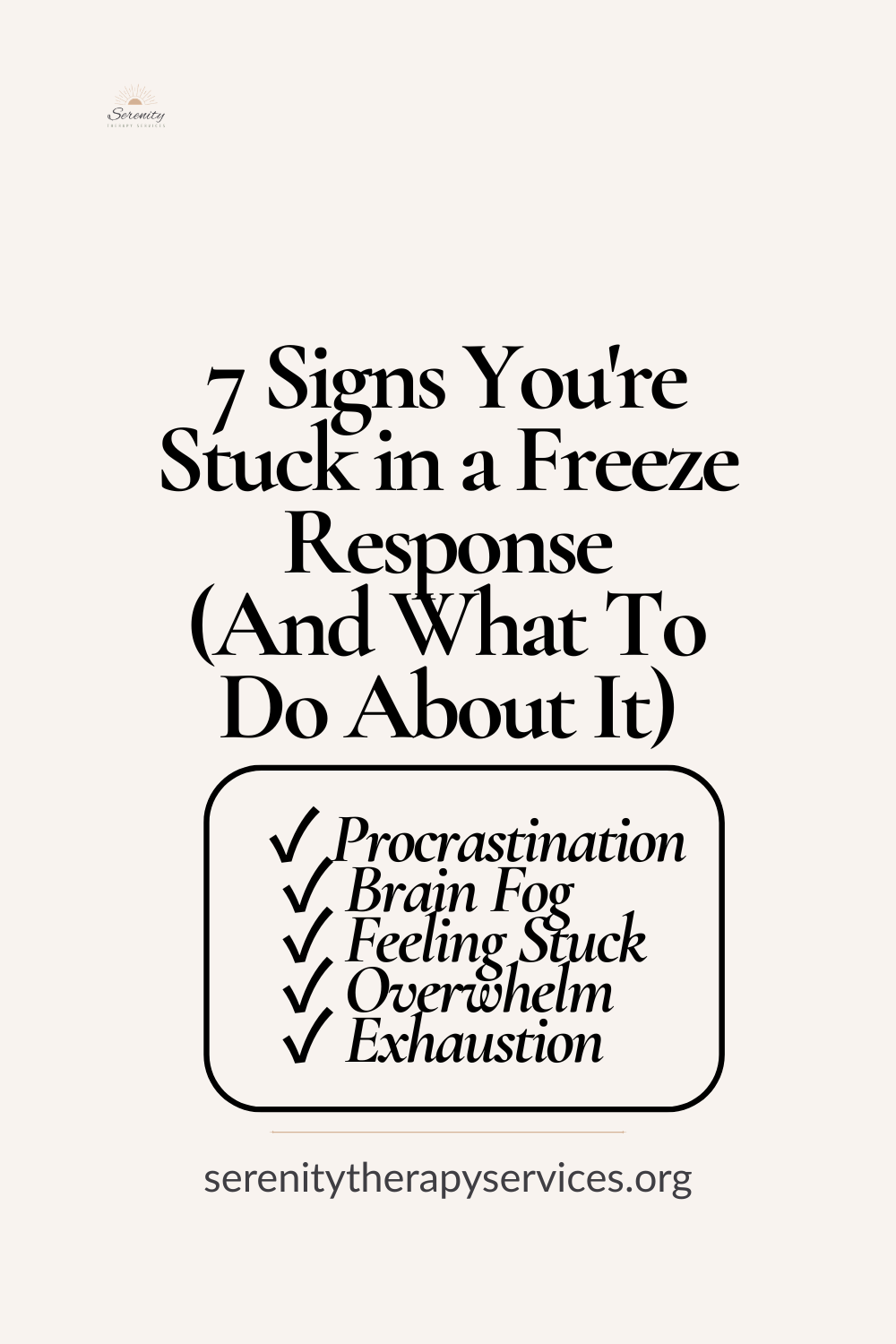
This can look like:
Procrastinating on important tasks
Difficulty making decisions
Feeling mentally foggy
Scrolling on your phone for hours
Starting multiple tasks but finishing none
Feeling exhausted despite getting rest
Avoiding things you know would help
Feeling stuck while simultaneously feeling overwhelmed
The frustrating part is that when people experience “the freeze,” they often end up judging themselves harshly.
They tell themselves:
"I need to try harder."
"I'm being lazy."
"What's wrong with me?"
"Everyone else seems to be handling life so well, why can’t I?”
In reality, their (your) nervous system may simply be overloaded.

Why Transitions Can Trigger Freeze
Humans generally function best with some degree of predictability.
Transitions—even positive ones—require adjustment.
Events such as:
The end of the school year
Starting homeschooling
A new job
Relationship changes
Moving
Financial stress
Becoming a parent
Children entering new stages of development
can all create enough uncertainty to activate our stress response.
Even when we're excited about these changes, our nervous system still has to adapt.
The more changes happening simultaneously, the more likely we are to feel overwhelmed.
The Hidden Pressure We Place on Ourselves
Many people experiencing freeze aren't actually doing nothing.
They're often carrying enormous mental loads.
They're managing responsibilities, caring for others, planning ahead, solving problems, and trying to keep everything running smoothly.
Yet because they aren't accomplishing the specific things they think they "should" be doing, they feel like they're failing.
What they don't recognize is that their nervous system may be spending most of its energy simply trying to keep up.
How to Move Through Freeze
The answer is often not to push harder.
Instead, it can be helpful to focus on creating safety and reducing overwhelm.
Some strategies include:
1. Shrink the Task
Instead of focusing on the entire project, identify the smallest next step. Sometimes, I literally will ask myself “Okay, what is the next thing?” and remind myself “one thing at a time.”
Rather than:
"I need to organize the whole house."
Try:
"I'm going to clear one counter, or work on one closet.”
2. Create Structure
During times of transition, routines can provide a sense of predictability and safety.
Simple anchors such as waking up at the same time, taking a morning walk, or maintaining a consistent bedtime can help regulate the nervous system.
With kids, this can be a little bit more challenging. Their routines and their structure is also changing and they are also dealing with the transitions. You might be noticing more outbursts or emotional occurrences, or behavioral challenges. This is their way of communicating that they, too, are dealing with the change. Creating a structure for them, as well can be helpful.
3. Focus on Completion
When we're overwhelmed, we often jump between tasks.
Choose one small task and complete it fully before moving on.
Small wins build momentum.
4. Practice Self-Compassion
The voice in your head matters.
If you wouldn't speak to a friend the way you're speaking to yourself, consider whether your inner dialogue may be adding to your stress.
You're Not Broken
If you've found yourself feeling stuck lately, you're not alone.
Life transitions can be challenging, even when they're welcome changes.
Sometimes what looks like procrastination is actually overwhelm.
Sometimes what looks like laziness is actually a nervous system asking for support.
And sometimes the most productive thing you can do is stop criticizing yourself long enough to understand what your mind and body are trying to communicate.
If you're navigating a season of change and finding yourself stuck, know that healing doesn't always start with doing more.
Sometimes it starts with understanding why you're struggling in the first place.
If this resonates with you, post a comment or send a message and let me know :) and if you’re needing help with dealing with the transitions, reach out! You don’t have to try to figure it all out alone. Contact me here or fill out the form at the bottom of the page to get in touch.