When Comparison turns into self-criticism…
comparison doesn’t always look like scrolling on social media and wishing you had someone else’s life.
Often, it’s much quieter than that.
It sounds like:
“She seems so put together.”
“I imagine she has systems that make life easier.”
“Why can’t I figure this out?”
Even when we know logically that what we see online or imagine about others isn’t the full picture, comparison can still sneak in — especially during seasons of overwhelm.
You might intellectually understand that homes are staged, routines aren’t perfect, and everyone struggles behind closed doors…
and still feel like you’re falling short.
I’ve seen this show up in my own life too — usually not in obvious ways. It’s less about scrolling social media and more about imagining how other people must have things figured out. I’ll catch myself thinking that someone else probably has better systems, more structure, or a routine that makes life feel easier. And when I’m already tired or overwhelmed, that comparison quickly turns into pressure — the sense that I should be able to manage things better by now.
The Emotional Layer Beneath Comparison
Comparison rarely shows up on its own.
For many people, it brings a wave of emotions:
guilt for not doing “enough”
overwhelm from everything that feels undone
anxiety about falling behind
shame or a sense of failure
These emotions don’t always announce themselves clearly. Instead, they often turn into self-critical thoughts:
“I should have this figured out by now.”
“Why can’t I keep up like everyone else?”
“There must be something wrong with me.”
At that point, comparison isn’t really about other people — it’s about what your nervous system is doing in response to pressure and perceived inadequacy.
From Emotion to Belief: How Self-Criticism Forms
When guilt, anxiety, or overwhelm aren’t acknowledged, the mind tries to make sense of them.
That’s when the beliefs come in:
I’m not good enough.
I’m failing.
I should be better by now.
These beliefs feel convincing because they’re fueled by emotion — not because they’re true.
And this is where many people think self-love means “thinking more positively” or “just being grateful,” when what’s actually needed is something much gentler.
Self-Love Isn’t Ignoring the Emotion — It’s Listening to It
Self-love isn’t pretending comparison doesn’t affect you.
It’s noticing:
I’m overwhelmed.
I’m anxious.
I’m feeling pressure to keep up.
And responding with compassion rather than criticism.
When you can acknowledge the emotional experience underneath comparison, the self-attack often softens on its own. You’re no longer trying to fix yourself — you’re caring for yourself.
That’s what creates emotional safety.
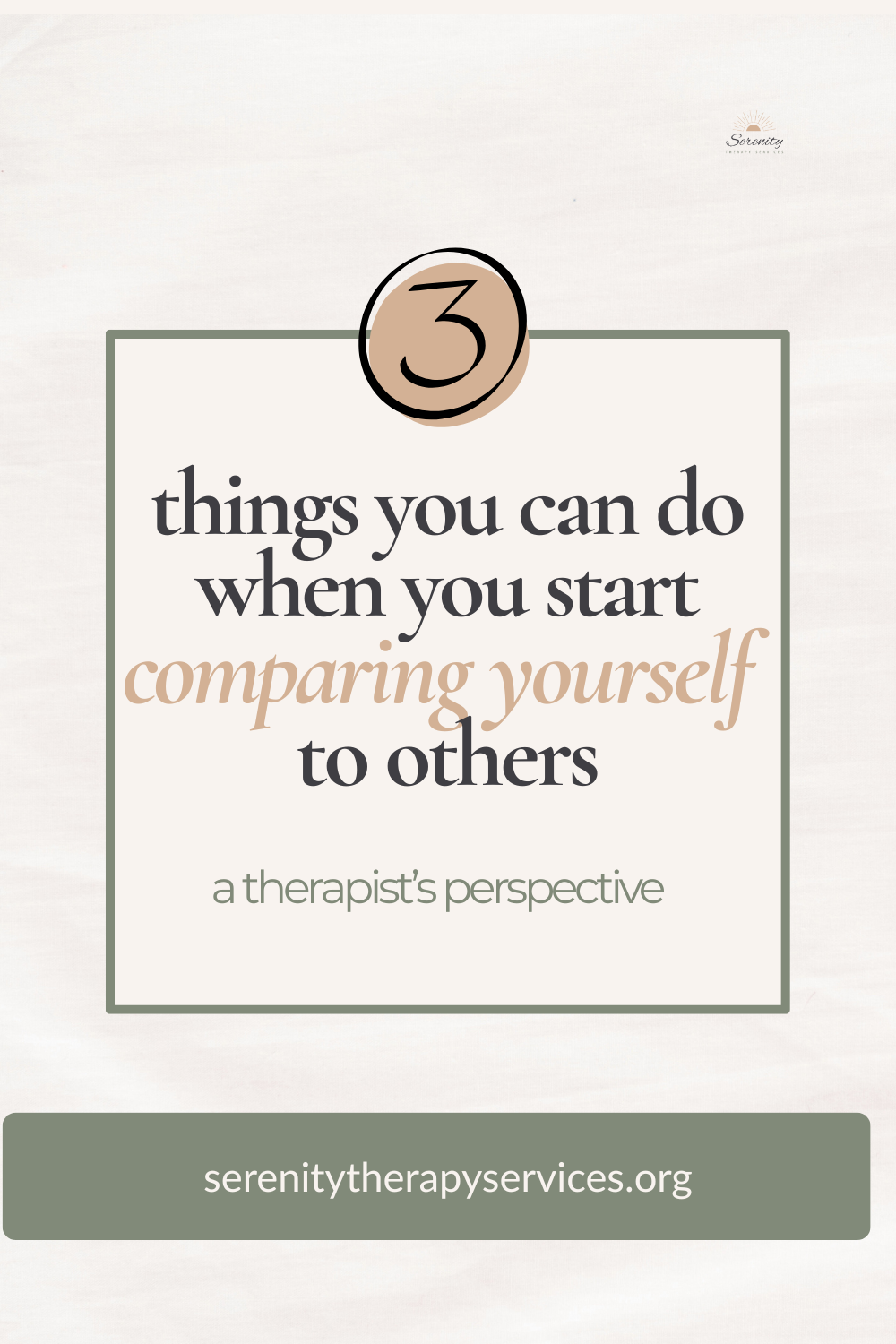
A Gentler Way to Respond to Comparison; things you can do when you start noticing comparison
Instead of asking:
“Why can’t I figure this out?”
2. You might gently explore:
What am I feeling right now?
What feels heavy or unrealistic in this season?
What would I say to someone I care about if they felt this way?
3. You might notice:
How you’re feeling in your body (somatic response);
What emotions are coming up for you (emotional response);
How you have responded to comparison in the past (i.e. blaming/shaming self —> going straight into research and action mode), and how you might want to respond instead.
This shift doesn’t erase comparison — but it keeps it from turning into self-betrayal.
Journaling Prompts to Practice Self-Love and Emotional Awareness
If comparison and self-criticism resonate with you, journaling can be a powerful way to slow down and reconnect with yourself.
Here are a few gentle prompts:
When I compare myself to others, what emotions come up first?
What story am I telling myself about what “having it together” means?
What am I needing more of in this season — rest, support, structure, compassion?
How would I speak to someone I love who felt this way?
I’ve also created a free Self-Love Journaling Worksheet with guided prompts designed to help you explore self-compassion, emotional awareness, and self-acceptance at your own pace.
A Final Thought
Comparison doesn’t mean you’re insecure or failing at self-love.
Often, it means you’re tired, overwhelmed, or carrying too much without enough support.
Self-love isn’t about having it all figured out — it’s about offering yourself kindness in the moments when you don’t.
Interested in Counseling / Therapy?
My name is Mattracea and I am a licensed therapist in the state of Missouri. I specialize in trauma therapy, anxiety therapy, and relationship therapy. I provide online counseling to individuals near Springfield, MO; St. Louis, MO; Kansas City, MO; Columbia, MO and all the rural areas in between.
To read more about trauma counseling, click here
To read more about relationship counseling, click here
I also have an online course/program for couples to enhance their communication and connection, click here
Or to read about services, rates, more information regarding counseling, click here
I also have a free workbook to help with inner dialogue that tends to be more critical! You can check it out or other free resources here